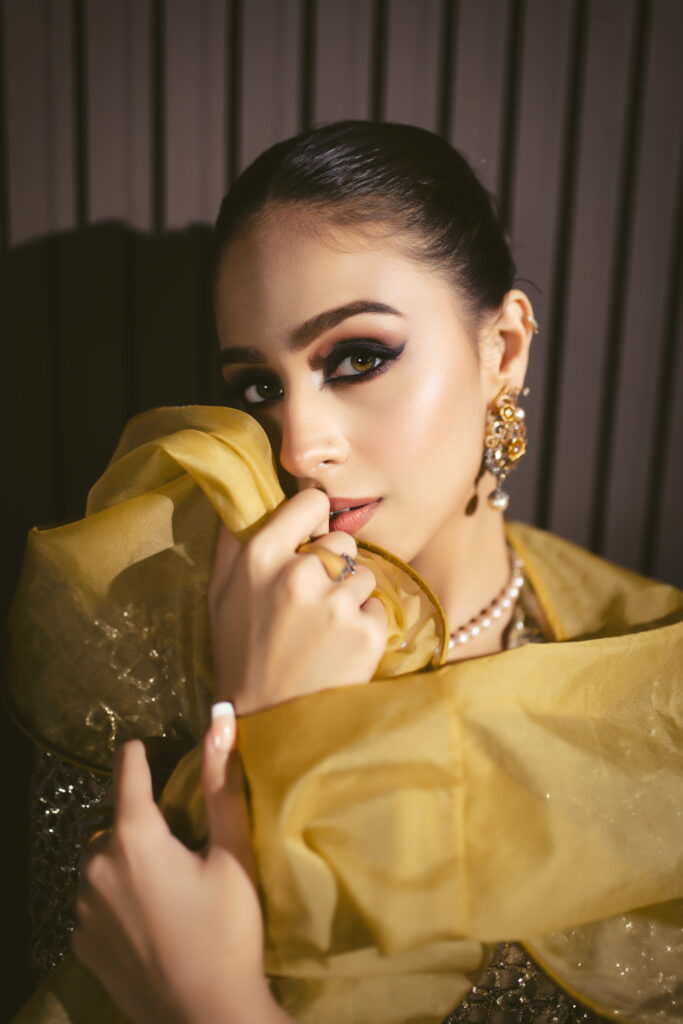
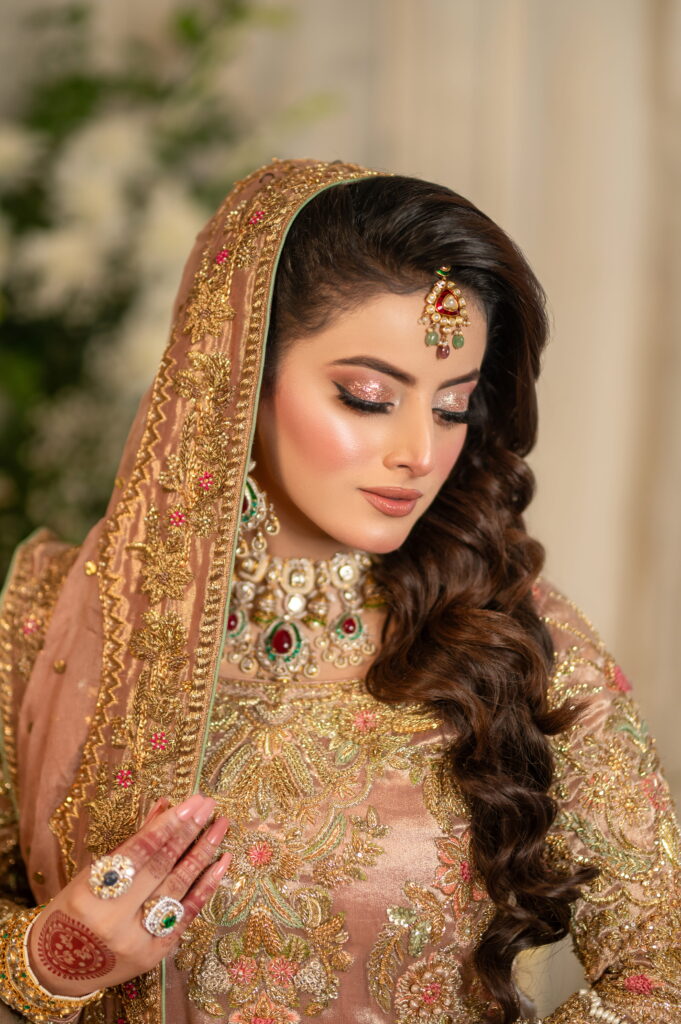
Your Mehndi, Barat and Walima are three different events, and your makeup should be three different looks. A Mehndi face is warm and festive, built to move with music and colour. A Barat face is bold and traditional, built to hold up under heavy jewellery and a full day of photography. A Walima face is soft and regal, built to read elegant across an evening reception. Wearing one look for all three is the most common bridal-beauty mistake, and in a city like Lahore, where your wedding season runs across back-to-back functions, it shows in the photographs.
This guide is written for brides planning their wedding in Lahore. It breaks down the makeup brief for each event, exactly what to tell your artist before they start, how far ahead to book, and why the trial is the step that ties all three looks together.
The short answer: your three looks at a glance
If you want the summary before the detail, here is how the brief changes across the three main events.
| Event | Mood | Skin finish | Eyes | Lips and cheeks |
|---|---|---|---|---|
| Mehndi | Warm, festive, playful | Fresh, lighter coverage | Soft festive colour, complements a colourful outfit | Earthy or coral, warm flush |
| Barat | Bold, traditional, regal | Full coverage, built for flash photography | Defined, smokey or shimmer-led, false lashes | Classic red or maroon, sculpted cheek |
| Walima | Soft, elegant, modern | Dewy, luminous | Subtle shimmer, smoked corners | Rosy pink, fresh flush |
The single rule underneath all three: your makeup should match the weight of your outfit and the energy of the event. A heavy Barat lehenga can carry a bold eye and a deep lip. A flowing Mehndi outfit and a dance floor cannot.
The Mehndi look: warm, festive, made to move
The Mehndi is your celebration. There is dholki, dancing and colour, and Mehndi outfits usually lean into bright shades like yellow, green, fuchsia and mustard rather than heavy formal embellishment.
Your makeup should match that energy. The brief here is a fresher skin finish with slightly lighter coverage, warm festive tones through the eye, and an earthy or coral flush rather than a deep formal cheek. The look needs to survive movement, warmth and hours of candid photography, so longwear matters more than heavy coverage.
What to ask your Mehndi artist for: a base built for movement and Lahore warmth, eye colour chosen to sit against your Mehndi outfit rather than your Barat palette, and a comfortable lip you can wear while you eat, sing and dance. If your Mehndi outfit is already heavily worked, ask for a slightly softer face so the two do not compete.
The Barat look: bold, traditional, photography-ready
The Barat is the main wedding day, and your makeup carries the most weight here. This is the heaviest outfit, the fullest jewellery and the longest stretch of formal photography, so the face has to hold up under all of it.
The brief is a full-coverage, long-wear base that reads cleanly under camera flash, defined eyes that usually lean into a smokey or shimmer finish with false lashes, and a classic statement lip in red or maroon. Barat outfits are traditionally red, maroon or deep gold, so the eye and lip are built to balance a strong outfit rather than disappear next to it. A matte or velvet base is often chosen here because it photographs consistently through a long day.
What to ask your Barat artist for: a base and setting approach made for long wear and flash photography, eye definition strong enough to stand up to your dupatta and jewellery, and a lip colour tested against your actual Barat outfit rather than a swatch on the hand. This is the look where precision matters most, because these are the photographs you keep for life.
The Walima look: soft, regal, modern
The Walima is your reception, and the mood shifts again. It is more formal than the Mehndi but lighter in feeling than the Barat. The modern Walima bride usually wants something graceful and luminous rather than dramatic.
The brief is a dewy, glowing skin finish, softer eyes with subtle shimmer or lightly smoked corners, and a rosy, fresh approach to lip and cheek. Where the Barat makes a statement, the Walima makes you look effortless, the most polished version of yourself on a calm, happy evening. Walima looks have moved towards softer, cooler tones in recent seasons, and the 2026 soft-glam direction of radiant skin and a satin lip suits this event better than any other.
What to ask your Walima artist for: a dewy rather than matte finish if your skin suits it, a softer but still defined eye, and a pink-toned lip and cheek that feel fresh against an evening outfit. Tell your artist if you want your Walima to look noticeably different from your Barat, because many brides deliberately want the two to contrast in their album.
What is trending for the 2026 wedding season
Before you lock your looks, it helps to know where bridal makeup is heading this season, because the strongest looks blend current trends with what genuinely suits you rather than chasing every one. These are the 2026 directions worth discussing with your artist.
Soft glam and “quiet luxury.” The heavy, mask-like base is out. Brides are choosing healthy, radiant skin that looks effortless but polished, with thin layering for long wear rather than thick coverage. This suits the Walima especially well.
Monochromatic makeup. One colour family carried across eyes, cheeks and lips, built on a single undertone such as peach, rose, bronze or mauve, for a harmonious, elevated finish. Multicoloured bridal faces are reading dated this year.
Blush draping over hard contour. Sharp sculpting is softening. Blush in coral, peach, rosewood or berry is swept across the cheeks and temples for a youthful, romantic glow, with contour kept gentle.
Glossy and satin lips. Glossy and satin finishes are returning alongside the classic matte, giving a fresher, more hydrated look that suits receptions and pre-wedding functions.
Pearlescent eyes. A thin, washed layer of pearlescent shimmer is replacing chunky glitter for an ethereal eye, while bold defined eyes still hold for the Barat.
A distinct look per function. The biggest shift is that curating a separate look for each event is now the norm, not the exception, which is exactly the approach this guide is built around.
None of these replace the event logic above. They sit on top of it. A 2026 Barat can stay bold and traditional while borrowing a pearlescent lid. A 2026 Walima can lean fully into soft glam, monochromatic tones and a satin lip. Bring the trends you like to your consultation and let your artist adapt them to your features, outfit and the function.
How to brief your artist: the bride’s checklist
Across all three events, the brides who are happiest are the ones who arrive with a clear brief. Decide these before you sit in the chair.
- Bring or describe your outfit for each event, including colour, embellishment and dupatta, so your lip and eye are chosen against the real thing.
- Share reference photos, but be honest about your own features and skin type rather than expecting an exact copy of someone else.
- Tell your artist the venue and lighting for each function, since a daytime event and an evening reception call for different finishes.
- Flag any skin sensitivities, allergies or breakouts in advance.
- Agree how different you want each look to be, so your Mehndi, Barat and Walima read as three distinct looks.
When to book bridal makeup in Lahore
Book your bridal makeup as soon as your wedding dates are confirmed. Bridal slots cluster and fill during peak wedding season in Lahore, so the earlier you secure your dates, the more choice you have over timing and artist. This is about protecting your dates, not pressure.
For peak wedding season, October to February, book three to six months ahead. Your trial usually falls around four to eight weeks before the wedding: close enough to be real, far enough to adjust anything, and bridal hair is designed alongside your makeup at the same trial. If you are planning a significant hair change such as colour or a cut, start that conversation around six months out so there is time to adjust.
Why the trial is the step you should not skip
A bridal trial is a practice run of your wedding-day look, and it is the part many brides are tempted to cut. It is the one we always recommend keeping.
A trial lets you see how a base wears on your skin over several hours, test your lip and eye against your real outfit, and check how the look behaves under camera flash before the day itself. It turns your wedding-morning appointment into a confirmation rather than an experiment. If you are doing all three events with us, a trial is also where we map how your Mehndi, Barat and Walima looks will differ, so each one is intentional rather than improvised on the day.
A practical tip: keep your trial company small, ideally one trusted person or none, so you are not balancing too many opinions, and speak up clearly about anything you want changed. Your artist would always rather adjust at the trial than on your Barat morning.
Frequently asked questions
How should Barat makeup differ from Walima makeup?
Barat makeup is heavier and built for all-day flash photography, with full coverage and a bold red or maroon lip, while Walima makeup is softer, dewier and more rosy for an evening reception.
What kind of makeup suits a Mehndi?
A fresher, warmer look with lighter coverage and festive eye colour that can handle music, dancing and movement.
Do I need a separate makeup look for each wedding event?
Most brides choose three distinct looks so each event feels different in their photographs, though how much they contrast is up to you.
How far in advance should I book bridal makeup in Lahore?
Book as soon as your dates are confirmed, since bridal slots fill during wedding season; for peak-season weddings from October to February, book three to six months ahead, with the trial usually four to eight weeks before the wedding.
Is a bridal trial really necessary?
A trial is strongly recommended because it lets you test how the look wears under flash and over several hours, and adjust it against your real outfit before the wedding day.
What are the bridal makeup trends for 2026?
The main 2026 trends are soft glam with radiant skin, monochromatic makeup in one colour family, blush draping instead of heavy contour, glossy or satin lips, and a distinct look for each wedding function.
What should I bring to my bridal trial?
Bring your outfit details or fabric swatches, your jewellery if possible, reference photos, and clean, product-free skin so your artist can judge the base accurately.
More answers on booking, branches and services are on our FAQs page, and more guides are in the Hifsa Khan Journal.
Plan your three looks with Hifsa Khan Salon
Your Mehndi, Barat and Walima each deserve a look built for that moment, your outfit and your features. The bridal team at Hifsa Khan Salon would love to help you plan all three, from a warm festive Mehndi to a regal Barat and a soft, luminous Walima. Book a bridal consultation at our DHA, Johar Town or Cantt branch, ask about the Signature Bridal Package (our Shandaar and Aima packages, both of which include a trial), and we will design a look around you for every event of your wedding.
Book a Bridal Consultation
Call 0304-1111820
Message Us on WhatsApp
Every event look and artist tier is on our bridal makeup page, and you can read what our brides say in our testimonials.